Server Mechanics Wiki

Server systems & mechanics

01

Our gameplay changes

Some places where we deliberately reshape vanilla DayZ. Several of the items below are self-coded by us and live only on the server; you won't find them as a downloadable extra anywhere. Read these first if you want to understand how Settlers actually feels different in play.

Combat

Drive-by shooting enabled

Pistols can be fired from inside a moving or stationary vehicle. The mechanic works from every seat except the driver's seat, so escorts, ambush responses and convoy defense become real options instead of "pull over and step out".

Long guns still stay slung in the cabin. Keep a sidearm holstered when you ride: it's the only barrel that will swing out a car window.

Pistols only Not from driver seat All other seats OK

Base defense

Fixed raiding

We rewrote how base parts take damage. The vanilla rules let stray bullets and even melee chip away at fortifications over time; on Settlers, a custom filter sits in front of every building part and only lets specific damage types through.

The result is bases that defend properly until someone arrives with the right tool and the right intent. Raids are events, not accidents.

Explosives Damage and break parts
Hacksaws Defeat code locks
Bullets No effect on parts
Melee No effect on parts
Conduct Having a tool does not authorise a raid. The Rules still cap raids: motive required, no spite-demolition, no repeated purposeless hits.

Communication

Adjustable radio range

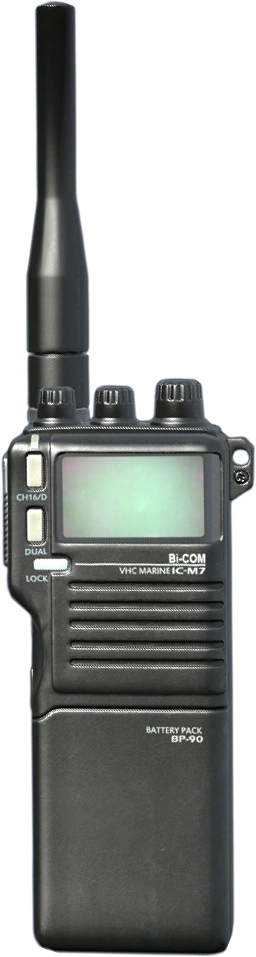
Hold a radio in your hand and you can change both its frequency and its transmission range. Higher range means farther reach, but it eats battery faster: scale your output to the conversation, not the dramatic potential of yelling into the void at full power.

We also run a Discord radio bridge. Anonymous text-mirrored chatter from a designated in-game frequency appears in a Discord channel, so survivors who are offline can still hear the airwaves. For your transmissions to be relayed, your in-game radio must be on and tuned to that channel's frequency.

Frequency + range Battery scales with power Discord bridge

Identity

Self-service custom flags

Group identity should not be locked behind an admin queue. Anyone can submit a flag for their crew, faction or settlement; once approved it is stitched into the world as a real, raisable flag texture and matching armband.

Bring a logo, a color palette, a survivor-radio call-sign. We turn it into something other survivors will recognize on a watchtower at 400 meters.

Communication

In-character radio bot

Our own Discord bot, written in-house by one of our staff team members, bridges Discord and the in-game airwaves. Hit Transmit in the dedicated IC Radio channel and your message is posted anonymously into the channel. At the same moment, a line appears at the bottom-left of every survivor's screen in-game: a survivor is speaking on 87.8 MHz.

Anyone can switch on their radio, tune to the frequency, and talk back directly. Combined with the adjustable radio range further up this page, it is the cleanest channel of contact this game has for organic roleplay: no third-party VOIP, no out-of-character workarounds, just a frequency in the dark.

Communication

Our own PDA network

A pocket terminal you will not find in any workshop. The PDA is our own build: a custom Reston B2 device model on top of a messaging network whose channels we wrote for this server. Its own item description says it best, a small military-style electronic device for the secure exchange of information over an encrypted radio channel through a mesh network principle.

It runs on a 9V battery and takes a 2x2 slot in your gear. It does not have to be in your hands to work: as long as a powered, undamaged PDA is somewhere on you, you are on the network and messages find you.

Global Open to everyone, messages drop off after 24 hours
Buy/Sell The standing trade board, offers stay up
Direct Private, one to one, once you add a contact
Notes A private pad that keeps what you write on it

Add somebody by name and they join your contact list with a live reachability marker, so you can tell whether the person you need is actually carrying a working device right now. Any contact can be muted or blocked, and your last 100 messages per conversation stay on your own device.

Going dark Nothing is held for you on the server. A dead battery, a ruined device or a logged-off survivor means the message simply never arrives. That cuts both ways: take the battery out and nobody can reach you.
9V battery required Global + Buy/Sell Direct messages Mute & block

World traversal

Navigation & maps

By default M opens nothing. The in-game map UI is locked behind a physical item: until you find a map of Chernarus in the world, your character genuinely doesn't know where they are.

Maps live in the kinds of places people who needed maps used to work: ranger stations, surveyor's huts, shipping offices. Until you have one, you navigate by landmarks, the sun, road signs and whatever your group can stitch together over the radio. The country's geography is meant to be earned, not handed out.

M requires item Find a map in the world Discovery first

Ownership

Vehicles & keys

Every drivable vehicle on Settlers uses a key. Keys are not handed out by admins. They are crafted through in-game interactions that you will have to discover for yourself; how and where is part of the world and the lore.

A key does not make a vehicle untouchable. With the right tools, a car can still be entered, hot-wired and stripped. Owning the key just makes it the path of least resistance. Watch where you park.

Keys must be crafted Tools can bypass Park smart

Economy & risk

High-risk, high-reward amphetamine chain

The trader on Settlers takes one currency, and nobody prints it: Dexamphetamine, a jar of paste that never spawns as loot. Every jar out there exists because somebody found three rare ingredients, carried them to one of four hidden lab houses and stood next to a smoking chimney until the batch was done.

That smoke is the catch. A lab at work can be seen from far away, everyone who wants to cook has to come to the same few houses, and whoever walks away with a full jar is carrying money. The trader waits at a separate hidden location, sells rare and unique gear for whole jars and buys nothing: your loot stays yours, and the jar is the only way to pay.

A jar holds five portions, and the trader counts portions. Every one you sniff is one you cannot spend. How the cooking works and what a sniff does to you is under The lab further down.

Ingredients Three rare finds per batch, scattered across the country
Lab house One of four, and its chimney smokes for as long as you cook
Jar Five portions, the only money the trader takes
Hidden trader Rare and unique gear for whole jars, buys nothing back
One currency Cooked, never looted Since October 2026
Thick black smoke rises into a blue sky behind a small white house on stilts at the edge of the woods

Food & farming

Village bakeries: from wheat to bread

Four bakeries stand in villages across Chernarus, built in-house from the sign over the door to the brick oven inside. They are the only places where grain becomes bread: the hand mill on the counter grinds a full harvest into a 2 kg sack of flour, and the oven turns flour, water, salt and yeast into loaves while a fire burns in its hearth.

It starts on a field. Wheat seed packets turn up in farms and villages; a planted packet grows to full height in under an hour as long as you keep watering it, and a mature plant gives one harvest of grain. Salt and yeast sit in kitchens and farmhouses. Everything else, grain, flour and bread, only exists because a survivor made it.

One sack of flour is five loaves, one bag of yeast stretches to ten. The oven bakes up to five loaves per batch, three minutes each, and walking away from it resets the batch. A loaf is heavy, very filling and honest food: it keeps for about a day, then it goes moldy wherever you left it.

Seed packet Plant it, water it, harvest once per plant
Hand mill A full harvest becomes a 2 kg sack of flour, enough for five loaves
Oven 400 g flour, 200 ml water, 25 g salt and 12.5 g yeast per loaf, three minutes each, five per batch
Bread 2,500 energy per loaf, goes moldy after about 24 hours
Four bakeries Built in-house Live since September 2026
One of the four Settlers village bakeries: a stone house with a tiled roof, a smoking brick chimney and a Cyrillic bakery sign over the door

Stimulants & risk

The lab: cooking Dexamphetamine

Four lab houses are tucked away in the country, each with a bench of glassware our team built from scratch. Bring three rare finds, a bottle of amphetamine oil, a bottle of sulfuric acid and a reagent kit, load the station and let it run. The flask fills, the receiver fills, and the whole time the chimney outside pours smoke. Anyone watching the village knows somebody is cooking.

The result is a jar of white paste, five portions of Dexamphetamine, and it never spawns as loot. A sniff buys you three minutes in which your stamina does not drop at all, whatever you are running from or carrying. Two quiet minutes follow. Then the crash: five minutes of burning through stamina faster and recovering it at half speed, with the sickness icon to remind you why.

Time it right and it wins a chase or a long haul north of the Wall. Time it wrong and the crash finds you exactly when you can least afford it.

Ingredients Amphetamine oil, sulfuric acid and a reagent kit, all rare loot
Lab station Cooks in one of four lab houses; the chimney smokes for as long as it runs
Dexamphetamine One jar, five portions, never spawns on its own
The curve 3 min no stamina loss, 2 min nothing, then a 5 min crash: 1.3× drain, half the recovery
Four labs Built in-house Five portions per jar
The lab station: a flask boiling on a hot plate, glass tubing running to a receiver, a jar of paste and a reagent case on the bench
02

Building

A base on Settlers is supposed to feel like a place someone built with their hands. We extend vanilla construction with serious fortification options and put the DayZ 1.30 code lock on doors and furniture as well, then let the damage filter (see section 01) protect what you put up.

The kit you'll work with

Start vanilla: rope and sticks combine into a frame, then progress through the standard tiers of fence, gate, watchtower and shelter. On top of that, an extended fortification set unlocks sandbag walls, reinforced gates, plate-armoured panels and decorative props that turn a generic compound into something defensible and personal.

Storage scales the same way: beyond vanilla containers there is a whole range of furniture to build and fill, from lockers and safes to crates and chests, and all of it can be locked.

Rope & sticks frame Sandbag walls Reinforced gates Plate panels Code lock Lockable furniture Plank bar Watchtowers Decorative props

Code locks and the plank

The code lock from DayZ 1.30 is not just for fence gates any more. It attaches to Building Fortifications doors, single and double, and to lockers, safes, cabinets, crates, chests and greenhouses. Put a charged 9V battery in it, attach it, set a code, and only people who know that code get through. On furniture the lock stays invisible: setting, entering and resetting the code all run through the action menu.

On a single door with a notched plank and the middle holders built, the plank works as a bar. It only goes up once a code lock with a code is attached and has been unlocked with that code. Without a lock the plank is a bar that opens from the inside only, and a door whose lock has been sawn off stays shut.

Raiders need a hacksaw: five rounds of three minutes on a gate or a door, and the saw is finished afterwards. Bullets, blows and explosives do nothing to an attached lock. Keep an eye on the battery, though. When it runs flat, or when you swap it, the code is gone and the lock stands open.

Plank door · in this order

  1. Attach the lock and set the code.
  2. Put the plank in. From now on it lifts only when the lock is unlocked with the code.
  3. New battery or new code? Plank out first, then set the code, then the plank back in. While the plank is in, the lock takes no new code.

Flat battery with the plank in: the door now opens from the inside only, for you as well.

Placement Bases must fit the survival aesthetic, can't block roads, hospitals or water wells, must sit at least 350 m from large military areas, and may carry a maximum of 10 locks on the path to loot. Vehicle and base limits are spelled out in the Rules.
03

Beyond vanilla

A long list of small additions sits underneath everything above. You'll never see them advertised on the launcher; you'll just notice the world is denser than vanilla DayZ. The pages below are grouped by what they do for you, not by where they came from.

On the road

Auto-run toggle

Bind it in Controls. Hold sprint, tap the bind, release; you keep running until a movement key snaps it off. The country's roads are long.

Custom road vehicles

A heavy four-wheel-drive workhorse for hauling a group and gear across rough country; and, at the other end of the spectrum, a fast classic muscle saloon that's only happy on tarmac and announces itself to everyone within two kilometers.

Flip a rolled vehicle

Misjudged a hill? Walk up to your upside-down car and the action prompt offers to flip it back over. No more wrecking a working V3S because of a bad camera angle.

Ear-plugs

Tap N to toggle them in and out. Cuts most environmental volume in half: the civilised way to ride in a loud vehicle, sit next to a generator, or sleep through a thunderstorm without ruining your evening.

Survival & the kitchen

Recipe-based cooking

Vanilla cooking still works as you remember it; on top of that, a recipe system lets you assemble multi-ingredient meals on a stove or in a pot. A real cooked meal returns far more calories than the same ingredients eaten separately, and a kitchen at home becomes one of the most reliable things a base can offer.

Combinable stackables

Half-eaten food, partial drinks, half-stack ammo, medical kits. Hover one over another in inventory and they merge. Saves slot space and makes long expeditions actually manageable.

Lockable storage chest

A dedicated, hard-walled chest with combination-lock support. Smaller than a tent, harder to crack, and good for the single most important thing in your base, whatever that turns out to be.

Combat additions

Expanded firearm catalog

An extra layer of curated firearms sits on top of vanilla DayZ; different calibres, different roles, ammo-sharing where it makes sense. Loot remains Vanilla+, not arcade. Rare guns stay rare.

Extra emotes & idle animations

The radial gesture wheel carries more options: wave, sit, lean, stretch. Small things, but they matter when an encounter is teetering and you'd rather not raise a weapon.

Social & trade

Writable notes & journals

Paper, notebooks and pens become real items: write on them, leave them in a stash, pin one to a doorframe, post a contract on a corkboard. Anything you write stays with the item; whoever picks it up reads exactly what you left.

Hand-to-hand trade

Stand next to another survivor, point at them, and press O to hand the item in your hands straight to them. No dropping it on the ground, no rummaging through a corpse-pile of inventory. Cleaner deals, fewer "it vanished in the grass" moments.

Wardrobe & world dressing

Wider wardrobe

The vanilla wardrobe doubles in size with civilian, work and field outfits. More silhouettes mean more group identity at distance, which pairs naturally with your custom armband and flag.

Base props & furniture

A deep catalog of placeable props, signage and furniture. Use it to make a generic compound look lived-in; bookshelves, lamps, tables, planters, signage. Organic RP lives or dies on these details.

Portable & placed lighting

Extra lanterns, work-lights, stand-mount torches and placeable lamps. Useful for compound work that has to outlast a wind-up flashlight and doesn't justify firing up a generator.

04

Restricted locations

A small number of places in ChernarusPlus 2.0 are intentionally locked or inaccessible at first. Getting in requires preparation, the right items, the right knowledge; sometimes all three at once.

Sealed doors in the hills, registers that only answer to their keys, chests that were placed with intent, and at least one site this website refuses to name: none of them are walk-in. None of them are pointless either.

The ChernarusPlus 2.0 briefing shows what we're willing to show, and the Lore tells you how it all got here. The rest is exploration, conversation and trial-and-error. Everything you can't reach today is reachable by someone, eventually. That someone could be you.

"A lock is a promise somebody made to themselves: I am coming back for this. This country is full of promises nobody kept."